Half seven on a Tuesday, and the call is an eighty-four year old woman who has been on her kitchen floor since about five. You are not going to lift her yet. You put the green bag down, sit on the floor beside her, and ask her what happened, and that is the exact moment FiveM UK ambulance RP either becomes one of the best jobs on a server or quietly falls apart.
Television has trained everybody to expect the defibrillator. Charge, clear, everyone stares at a monitor, patient sits up and says something meaningful. On a real shift the defib stays in the bag, and the kit you reach for is a blood pressure cuff, a torch and the ability to hold a normal conversation with somebody's mum while her son hovers in the doorway offering tea. Nobody ever refuses the tea. It would be rude.
So this is about playing that job properly in a British setting: the call categories, single responders against a double crewed ambulance, scene safety, HART and the air ambulance, and the pacing that turns a callout into paramedic roleplay rather than fast travel with sirens on. It is guidance for a game rather than a training aid, so it sits at the level of what a player can portray.
What the call categories mean and how they change your driving
Calls into the trust's control room get triaged into categories one to four, on the answers the caller gives on the phone. The category is a decision about how much of the service goes to that address, and it should be the first thing shaping how your unit behaves.
Category one is immediately life threatening. Cardiac arrest, not breathing, unresponsive after a collapse. Everything within reach moves: nearest response car, nearest ambulance, a community first responder, often the air ambulance too. Blue lights and sirens, and the call handler stays on the phone talking the caller through CPR while you are still driving.
Category two is an emergency and the bulk of the work. Chest pain, a suspected stroke, serious breathing difficulty, a fall with an obvious injury. Blue light response, proper urgency, but the world does not stop for it.
Category three is urgent, and the woman on the kitchen floor is usually this one. Nobody is dying. Control might send a car, might send an ambulance, might ring the family back twice while they wait, and it is entirely normal for a household to have waited hours before anyone knocks. Playing that wait honestly is worth more than any siren.
Category four is the least urgent tier, and much of it never ends with a vehicle at all. Advice on the phone, a referral somewhere more suitable, a booked visit later.
There are published standards attached to all four and I am not going to quote numbers I would get wrong. The shape is the useful part. The category decides whether you drive on blue lights or drive like a person, and blue lights to absolutely everything is the clearest sign a player has not thought about the job. Britain makes that drive its own small adventure anyway: terraced streets parked up both sides, mini roundabouts, bus lanes, and quiet negotiations with drivers who mostly want to help. If your server has already worked out how British roads and public transport behave, the response drive will feel like it happened here.
Not everything arrives through 999, either. Calls taken by 111 get passed on and generate ambulance responses too, with a different flavour: older patient, symptoms two days old.
One paramedic in a car is a different unit to an ambulance
A fast response car carries one clinician and no patient. Most FiveM UK ambulance RP quietly ignores that, which is a waste, because it splits the job into two roles that need each other.
The response car gets there first. The paramedic assesses, starts treatment, then makes a decision worth playing: stand the ambulance down because this person does not need one, or get on the radio and ask for it urgently. They cannot take anybody to hospital, so somebody else has to turn up regardless.
The double crewed ambulance is two people and the vehicle that can actually convey. Carry chair, stretcher, tail lift, and a space in the back where one crew member sits with the patient. Two players in one vehicle beats two players in two vehicles every time, because the shift becomes a conversation.
Small servers should lean into that. If one medic is online, put them in a response car rather than parking a lonely ambulance outside the hospital. Asking for backup becomes a line on the radio instead of a favour begged in Discord, and when a second medic logs in they crew up.
Scene safety, and why the ambulance waits at the end of the road
The crew does not go into a scene that is not safe. Weapons, an ongoing fight, an aggressive dog, an unstable vehicle, anything chemical. They stage a street away and wait for police to say it is clear, in exactly those flat radio terms: staging at the junction, call us in when it is safe.
Waiting a hundred metres from somebody who is bleeding is deeply uncomfortable, and it is some of the best material in the job. Players hate it, which is roughly how you know it is right. It also gives police a function beyond crowd control, because the medics are waiting on their word.
Police are often on scene first anyway, carrying a defibrillator and trauma kit, and will have started something before you arrive. So will the fire service, who own the metal at a road traffic collision while the paramedic owns the patient. That division plays beautifully: the fire crew cutting the roof off, the medic in the back seat holding someone's head still and asking about their dog. Getting three services to behave as one operation rather than three separate hobbies is most of the work in running an emergency services server, and scene safety is the habit that forces them to talk.
HART, the specialist teams and the air ambulance
HART is the Hazardous Area Response Team, paramedics with the training and kit for places an ordinary crew should not walk into. Inside a cordon at a firearms incident, at height, in water, in a confined space, in breathing apparatus at a chemical job.
They do not replace the ambulance crew. Their job is usually to reach the patient where they are and bring them out to somewhere a normal crew can work. That is the detail servers get wrong: HART arriving does not mean everyone else stands down, it means the scene now has layers, a hot zone and a cold zone and a point where casualties come out and get handed over. Keep it rare and keep it earned, because a HART response is a team with a specific vehicle rather than one player in a different jacket. Specialist paramedics and advanced practitioners are the affordable version, working out of cars and finishing jobs at the address without conveying anyone.
Air ambulances are the other thing servers overuse, and in Britain they are charities. The reason to want one is the crew rather than the helicopter: a doctor and a critical care paramedic carrying blood and the ability to anaesthetise somebody at the roadside, bringing hospital level decisions to the patient rather than waiting for the patient to reach a hospital. That keeps the list short. Serious trauma, a long entrapment, a cardiac arrest miles from anywhere, a patient who needs something done before the journey.
Then the part servers get backwards: the aircraft often delivers the team, and the patient still travels by road with the doctor on board. Landing needs a site cleared and held, with wires and lampposts and spectators with phones, which is a job for other players. Once a week that is an event people talk about. At every bumper scrape it is a taxi with rotors.
Assessment before treatment, which is basically the whole job
The primary survey comes first and takes seconds. Is the scene safe, are they responding, is the airway clear, are they breathing, how is their circulation. Those few seconds decide whether the next twenty minutes are calm or extremely not calm.
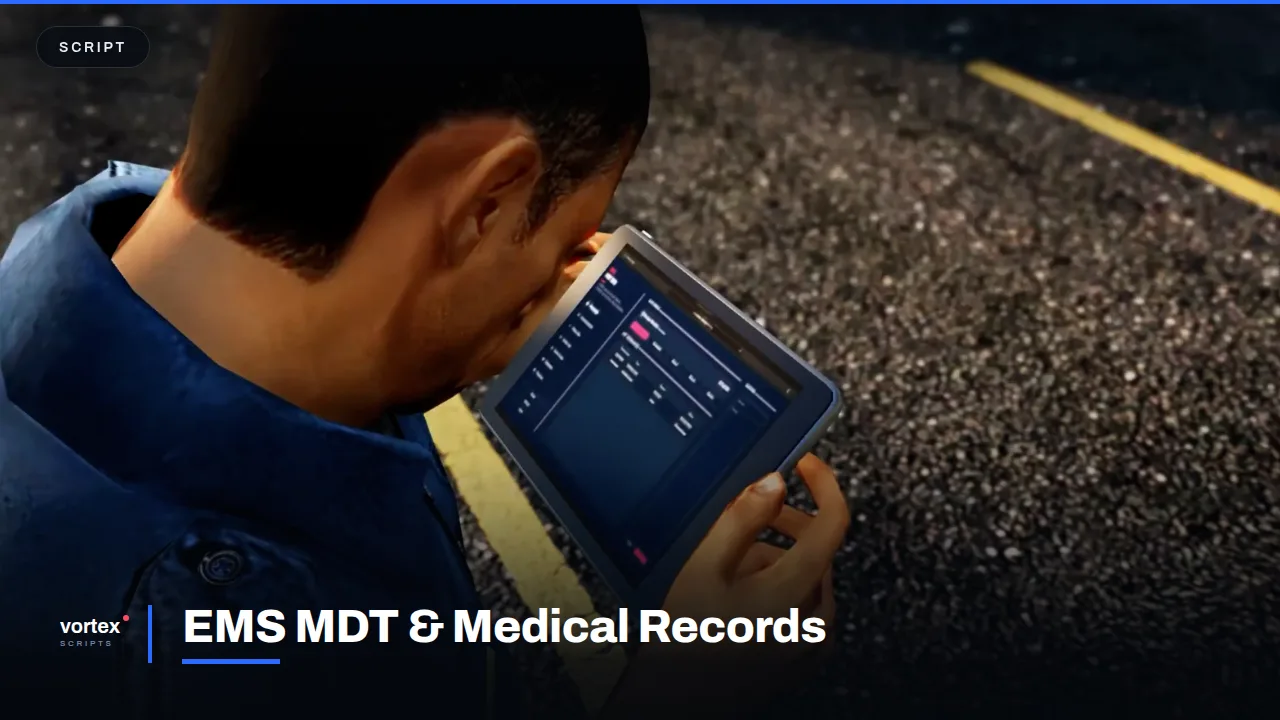
Then obs, the bit players skip. Pulse, blood pressure, oxygen saturation, breathing rate, temperature, blood sugar, an ECG for anything that smells cardiac. You portray it rather than simulate it. I am just going to pop this on your finger. The cuff inflating and the pause while it reads. Numbers read out to your crew mate, who writes them down.
Then the history, where most of the answer lives. What happened, when did it start, what does it feel like, what medication are you on, any allergies, do you live alone. Ask the family, who will tell you things the patient will not, and look round the room while you talk: pill boxes on the side, the stairs, the bathroom on the wrong floor.
Keep it at the level you can act. You do not need drug doses and your server does not need a clinical wiki, because this is a game and pretending otherwise makes it worse. What sells paramedic roleplay is talking to the patient like a person and being slower than anyone expects.
Patients have a job here too. Reading a status bar out loud kills the scene instantly. Saying it started after lunch, it feels like a band round your chest and you have gone a bit clammy buys you twenty minutes of roleplay instead of a lie down and a health bar.
Conveying, treating on scene, and the handover at hospital
Plenty of jobs end with the patient staying where they are. Treated at the address, referred to a GP or a falls team, given advice and a list of reasons to ring back. That decision is the drama, and it is the most under-used scene in FiveM UK ambulance RP.
Somebody who does not want to go and probably should. Somebody who wants to go and does not need to. An adult who understands the risk is allowed to refuse, so the crew writes it down and leaves, and that ending is quietly awful in a way scripted content never manages.
If they are being conveyed to hospital, the journey counts. Carry chair down a narrow staircase, stretcher into the back, one crew member sitting with them the whole way. Conversations happen in the back of an ambulance that happen nowhere else on the map, and driving there in silence throws away the best five minutes of the call.
Handover at the emergency department is structured and short. Age, what happened, what you found, what you did, latest obs. Then you wait, because the department is busy and you do not hand over the second you arrive, and you are unavailable until you do. Model that queue and ambulance cover turns into a real constraint instead of an infinite resource. Restock, clean the vehicle, book back available. That loop is config rather than culture, and setting the ambulance job up properly on QBCore covers the parts that need code.
The short version
Let the category decide how you drive, and let most of them be unremarkable. Split single responders from double crewed ambulances so people need each other on the radio. Wait at the end of the road when the scene is not safe, and keep HART and the air ambulance for the jobs that deserve them. Assess before you treat, and accept that plenty of calls end with nobody going anywhere. Do that and your best shift of the week is twenty-five minutes on a kitchen floor with a woman who wants to know whether you have eaten, while the defibrillator stays in the bag where it usually lives. Have the tea.